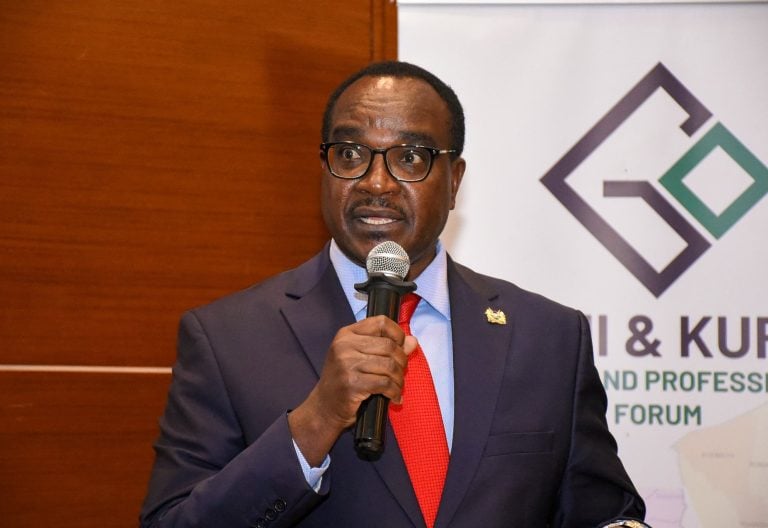
Education Cabinet Secretary Julius Ogamba has announced when the Kenya National Examinations Council (KNEC) will release results for the 2025 KCSE, KJSEA and KPSEA exams.
Speaking during a media briefing on Wednesday, October 29, Ogamba said results for the Kenya Primary School Education Assessment (KPSEA) and the Kenya Junior School Education Assessment (KJSEA) will be released in December 2025, while the Kenya Certificate of Secondary Education (KCSE) results will be out in January 2026.
This year’s KCSE examinations kicked off on Tuesday, October 21, with candidates starting with oral papers in French, German, Arabic, and Kenyan Sign Language.
KNEC Chief Executive Officer Dr. David Njengere confirmed that 996,078 candidates are sitting for the KCSE exams, while over 2.4 million learners across the country are taking part in the KPSEA and KJSEA assessments.
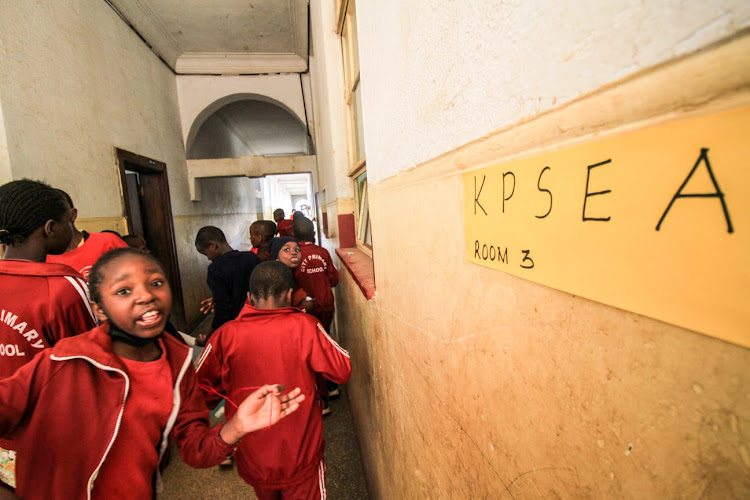
Out of these, 1,130,669 learners are in Grade 9 taking the KJSEA, and 1,298,089 pupils in Grade 6 are undertaking the KPSEA bringing the total number of learners under assessment this year to 3,424,836 nationwide.
The KPSEA, which ran from October 27 to 29, marked the completion of primary school, while the KJSEA, scheduled from October 27 to November 3, assessed learners transitioning from junior to senior school in January 2026 .
“The new system marks a key shift from the old KCPE model, It emphasizes skills, creativity, and continuous learning rather than one-off, high-stakes testing.” said CS Ogamba.
Unlike the phased-out KCPE, learners will not receive certificates. Instead, they will be issued result slips indicating their performance in each subject.
The KJSEA evaluates learners in English, Kiswahili, Mathematics, Integrated Science, Social Studies, Religious Education, Agriculture, Pre-Technical Studies, Creative Arts, and Physical Education. The results will contribute 60% of the learners’ final score, with the remaining 40% drawn from school-based assessments in Grades 7 and 8.
As students move to senior school, placement will be determined by their performance, interests, and strengths across three main pathways ; Arts and Sports Science, Social Sciences, and STEM (Science, Technology, Engineering, and Mathematics).
The Competency-Based Education framework aims to nurture learners’ intellectual and creative potential through a more personalized and practical learning experience.