
Comprehensive school headteachers have strongly rejected a proposal by junior school (JS) teachers to move the management of junior schools from comprehensive institutions to senior secondary schools.
The JS teachers have been lobbying for autonomy, arguing that they should operate independently from the current comprehensive school system.
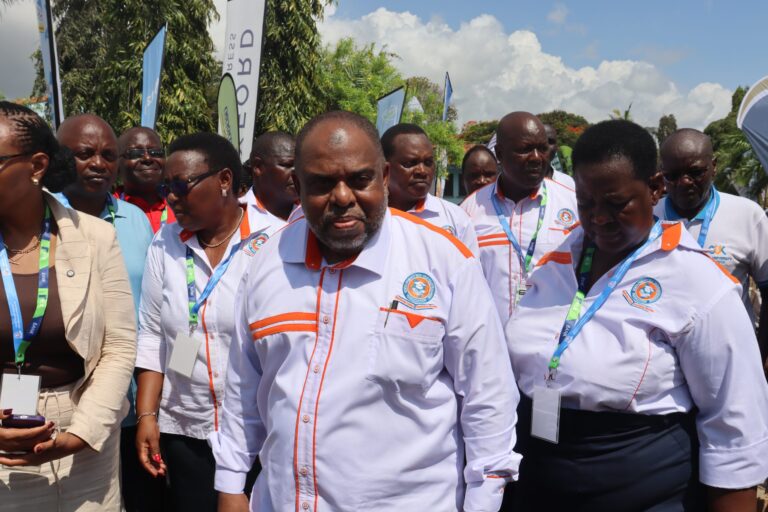
Kenya Comprehensive School Headteachers Association (Kecsha) national chairman Fuad Ali dismissed the proposal on Monday, insisting that the current structure was the outcome of extensive consultations under the Presidential Working Party on Education Reforms (PWPER).
Ali cautioned the teachers against bringing union politics into education management, saying such moves risk undermining the collaborative spirit that has sustained the system.
“Calling for independence is like saying you are enslaved , yet no one in Kenya’s education system is a slave,” Ali said.
“Placing junior schools under comprehensive schools was one of the most widely supported reforms. It remains one of the best decisions ever made for our education sector.”
Speaking during the 2025 Kecsha/KCB National Annual General Meeting and Conference in Mombasa, where more than 15,000 headteachers gathered, Ali praised the seamless integration of junior school learners within comprehensive schools. He said strong leadership had ensured unity and academic success.
“If there was no leadership, we wouldn’t have completed the Grade 9 assessments smoothly across the country,” he said.
Ali emphasized that headteachers had successfully managed both the Kenya Primary School Education Assessment (KPSEA) and the Kenya Junior School Education Assessment (KJSEA), demonstrating their capability.
“We’ve completed Grade 6 and Grade 9 assessments without any security personnel. From the containers to the classrooms, everything ran smoothly — thanks to the leadership of the 15,000 headteachers here today,” he said.
He added that junior school learners are leaving the system well-prepared for senior secondary education, having developed key leadership and problem-solving skills under the Competency-Based Education (CBE) curriculum.
“CBE encourages students to think critically and express themselves openly. They can tell you what’s right or wrong without fear,” Ali said. “It fully engages their brains and builds ethical, confident learners.”
The Kecsha chair also urged the government to increase funding for comprehensive schools to match their growing responsibilities, even as he commended the current capitation levels for junior schools.
He called for the construction of more laboratories to improve the quality of science education and invited private partners to help fill infrastructure gaps.
“This is not the government’s burden alone. We want more stakeholders, like Kenya Commercial Bank, which has supported us for years, to step in,” he said.