
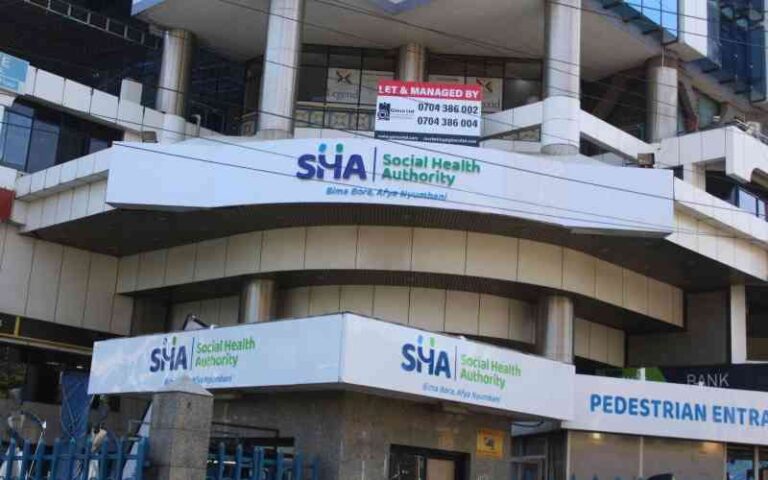
The Teachers Service Commission (TSC) has announced plans to transition educators from their current private insurance scheme to the national health scheme under Social Health Authority (SHA), effective 1 December 2025.
The move which aims to expand access and coverage, has generated concern among teachers’ unions.
Currently, teachers are insured under a private arrangement managed by MINET Kenya/Aon‐Minet, whose contract expires on 30 November 2025. From 1 December 2025, teachers and their dependents are expected to be enrolled in SHA’s Public Officers’ Medical Scheme Fund.
According to SHA, all registered teachers and their dependents will be eligible for benefits under the Primary Healthcare Fund, Social Health Insurance Fund, and the Emergency/Critical/Chronic Illness Fund, provided they are contributing members.
Parliament’s Education Committee has also proposed introducing a specialized “premium” SHA cover for teachers, reflecting their large numbers and unique healthcare needs.
The teachers employer explains that the shift stems from persistent challenges under the private insurer model, including limited hospital access, inadequate specialist care, and uneven support across the country.

The transition to the SHA system is intended to provide more comprehensive and equitable health coverage for educators.
SHA has assured that teachers are fully eligible for coverage under its framework and that the public scheme is designed to ensure universal access to quality healthcare across Kenya.
The Kenya National Union of Teachers (KNUT) have voiced strong opposition to the planned migration.
The union argues that the existing private insurance offers more reliable access to specialized and overseas treatment, particularly for teachers managing chronic illnesses.
Union representatives have also criticized the lack of thorough consultation, expressing fears that benefits could be reduced and service quality compromised.
Another major concern is the potential for “double deductions”, as teachers already contribute to their current scheme and worry they might be required to pay again under the SHA model.
The transition affects over 400,000 teachers and their dependents, raising fears of a possible coverage gap between the end of the current contract and the rollout of the new scheme.
Questions also persist regarding hospital accreditation and service readiness. Although SHA reports that thousands of health facilities are already contracted, unions remain skeptical about whether access and service quality will meet expectations.